Out of the Cradle · Scienshell film series · EP05 · 23:13 · Paid
Suburban Wonderland
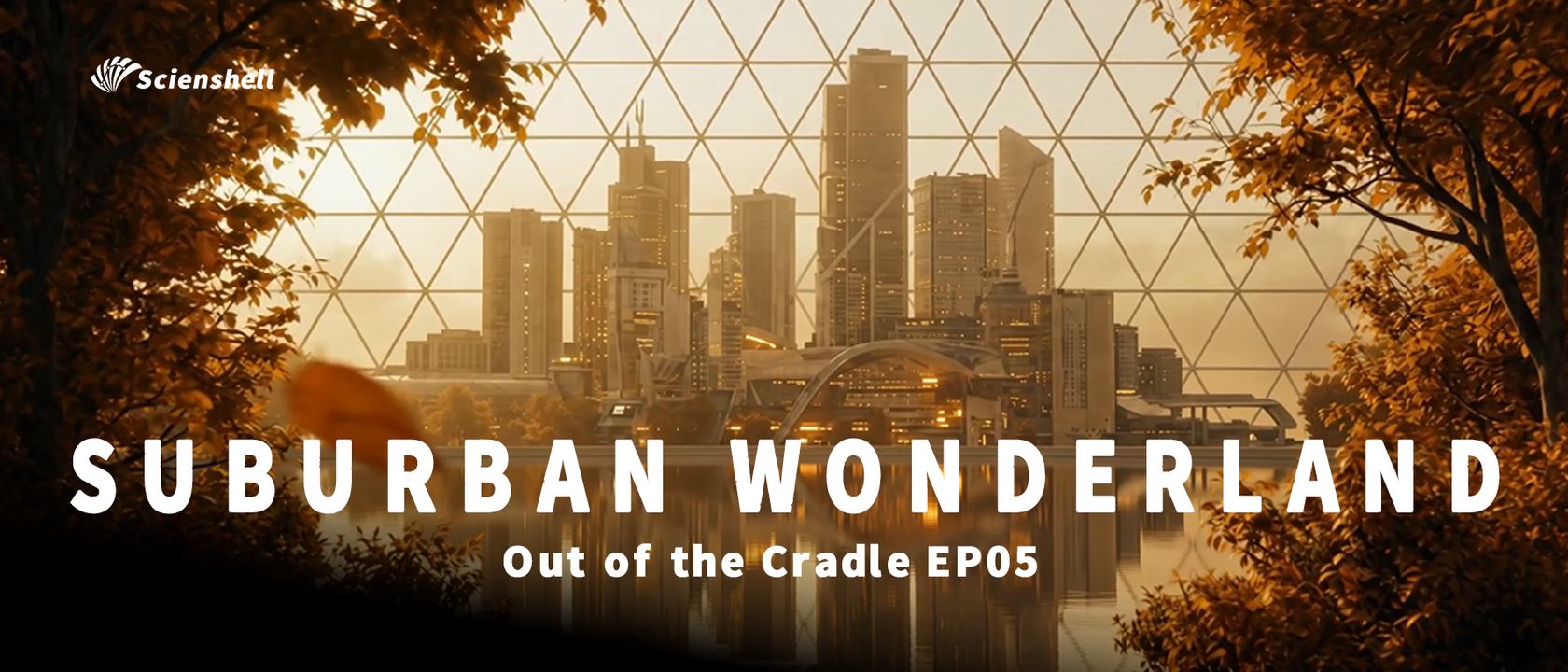
What would it feel like to make a home far beyond Mars? On Titan, a settlement enclosed within an engineered shell separates everyday life from the moon's extreme cold and unbreathable atmosphere.
Buy episode — Suburban Wonderland
Inside the film
Out of the Cradle EP05 imagines the infrastructure, resources, and routines behind that distant community. Suburban Wonderland is a science-fiction film in documentary form about the step after arrival: learning to live in an unfamiliar world.
Science and imagination
Scientific ideas provide a starting point for this imagined world. The film’s civilizations, technologies, and events are speculative, and its documentary style should not be read as a report of real events.
Facts
- Titan has a dense atmosphere and surface liquids
- Titan has a thick, nitrogen-rich atmosphere and lakes and seas of liquid methane and ethane. The enclosed settlement depicted in this film is fictional. NASA: Titan facts
FAQ
Which series is this film part of?
This is EP05 in Out of the Cradle. You can explore the series page for the films currently available.
Is this film free to watch?
No. EP05 is a paid film. New purchases are temporarily unavailable while we prepare Oceanpayment checkout. If you already own it, sign in with the account used for your purchase to watch.
Is this a record of real events?
No. It is science fiction told in documentary form. The future settings and engineering scenarios are imagined.